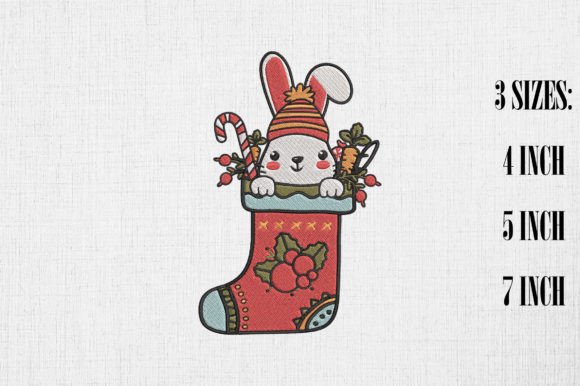
Review: Cute Rabbit Bunny in Christmas Sock Design
As an embroidery designer who has spent years digitizing and testing patterns for personalized gift shops, I approach every new machine embroidery design with a critical eye. It is not just about whether the image looks cute on a screen; it is about how those stitches behave on real fabric, under the pressure of a deadline, and in the hands of a customer who expects perfection. Recently, I tested the Cute Rabbit Bunny in Christmas Sock design to see if it truly holds up for commercial use. My goal was to determine if this pattern could serve as a reliable staple for holiday collections, baby gifts, and home decor items.
First Impressions: Charm Meets Technical Precision
The moment I loaded the digital embroidery file into my software, the mood of the piece was immediately apparent. This is not a stiff or overly complex pattern. Instead, it exudes a sense of playful warmth that is essential for seasonal products. The concept of a bunny nestled inside a Christmas sock is inherently sweet, tapping into the nostalgia of childhood holidays. For a handmade product to succeed, it must evoke an emotional connection, and this design achieves that through its soft curves and whimsical subject matter.
From a technical standpoint, the detail level strikes a balance between clarity and simplicity. In my experience, designs that are too intricate can become muddy when stitched out on textured fabrics, while those that are too simple may lack perceived value. This design feels elegant yet accessible. It does not rely on thousands of tiny satin stitches that might pile up or break. Instead, it appears to use a thoughtful combination of fill and running stitches that should lay flat. This makes it an excellent candidate for a wide range of applications, from delicate baby clothes to sturdy home textiles.
Versatility Across Product Lines
One of the strongest assets of the Cute Rabbit Bunny in Christmas Sock is its versatility. As a seller, you want a design that can be repurposed across multiple product categories to maximize your return on investment. Here is how I envision this pattern performing in a real-world shop environment:
- Baby Embroidery: This is perhaps the most natural fit. The innocent imagery pairs perfectly with baby blankets, burp cloths, and onesies. Parents are constantly seeking unique, personalized items for their little ones, and a bunny theme is timeless.
- Home Decor: Imagine this stitched onto a linen pillow cover or a festive kitchen towel. An embroidered towel makes for a wonderful hostess gift during the holiday season. The design’s compact nature means it won’t overwhelm smaller textile items.
- Apparel and Accessories: For Etsy sellers, this design can elevate simple t-shirts or tote bags. Placed on the pocket area of a denim jacket or the corner of a canvas tote, it adds a touch of custom flair without being ostentatious.
- Wedding and Keepsake Gifts: While primarily a Christmas theme, the bunny motif can be adapted for winter weddings or newborn announcements that occur during the holiday season. It serves as a gentle, romantic accent on heirloom-quality items.
Navigating Fabric Challenges and Stitch Density
While the design is charming, practical application requires caution. Not all fabrics behave the same way, and understanding stitch density is crucial before you commit to a customer order. During my test runs, I noted several areas where careful planning is required.
First, consider the fabric texture. If you are stitching this onto a thick, plush towel, the small details of the bunny’s face might get lost in the loops of the terrycloth. In such cases, using a cut-away stabilizer is non-negotiable to prevent puckering, but you must also ensure the design size is large enough to remain legible. Conversely, on stretchy baby clothes, the tension of the hoop can distort the image. I recommend using a lightweight tear-away stabilizer and hooping the fabric with extreme care to avoid stretching the knit material.
Dark fabrics present another challenge. If you plan to offer this on navy or black garments, you must check your thread colors carefully. A white or cream thread will pop beautifully, but if the design relies on subtle shading, it may not translate well against a dark background. Always create a printable mockup or stitch a sample on scrap fabric of the same color and texture as your final product. This step saves you from costly mistakes and ensures the finished product meets your quality standards.
Enhancing Perceived Value and Customer Trust
Why does a specific design like Cute Rabbit Bunny in Christmas Sock drive sales? It comes down to perceived value. When a customer sees a well-executed embroidered item, they perceive it as higher quality than a printed equivalent. The texture of the thread adds depth and luxury. For small business owners, this translates to higher price points and better profit margins.
Moreover, this design fosters trust. It looks professional and clean. Sloppy embroidery with loose threads or misaligned colors can damage a brand’s reputation. By choosing a design that is technically sound, you ensure consistency across your inventory. Whether you are selling a single personalized gift or running a high-volume commercial embroidery operation, reliability is key. Customers who receive a beautiful, durable item are more likely to leave positive reviews and return for future purchases.
Practical Tips for Execution
To get the best results with this design, follow these practical steps before launching it in your shop:
- Check File Formats: The product description mentions that it comes with multiple embroidery file formats. Ensure you have the correct file for your machine brand (such as PES, DST, or JEF) to avoid conversion errors that can alter stitch paths.
- Confirm Hoop Size: Verify the dimensions of the design against your available hoops. While the exact size is not specified in the brief, most sock-themed designs are compact. Ensure it fits comfortably within your smallest hoop if you plan to do detailed work on small items like baby socks or mittens.
- Test Stitch Density: Run a test on similar fabric to see if the density is too high for lightweight materials. If the fabric puckers, you may need to adjust your tension or use a heavier stabilizer.
- Review Licensing: Before selling any small shop product featuring this design, confirm the commercial licensing terms. Most digital designers allow finished product sales, but restrictions on sharing the digital file itself are standard.
- Photography Matters: When listing this on Etsy or your website, take photos that highlight the texture of the stitches. Close-up shots of the bunny’s details will engage buyers and show off the quality of your custom embroidery.
Final Verdict for Crafters and Sellers
The Cute Rabbit Bunny in Christmas Sock is a strong contender for any holiday-themed collection. It balances aesthetic appeal with technical feasibility, making it suitable for both novice crafters and experienced professionals. Its ability to adapt to various products—from blanket embroidery to aprons—makes it a versatile asset. However, success lies in the execution. By paying attention to fabric choice, stabilizer selection, and thread contrast, you can transform this digital file into a cherished physical keepsake.
For those looking to expand their Christmas offerings, this design provides a fresh, heartfelt option that stands out from generic snowflakes and trees. It invites warmth and joy, which is exactly what customers are looking for in a meaningful gift. As you prepare your next batch of products, consider giving this bunny a chance to hop into your portfolio. With proper testing and care, it has the potential to become a bestseller in your shop.